
ISSN 3085-9484
ISSN 3085-9484

ISSN 3085-9484
The turning point of Oral and Maxillofacial Surgery and Traumatology
Carta do Presidente
We are experiencing a period of great challenges, but also of unique opportunities for Oral and Maxillofacial Surgery and Traumatology. The historical tensions surrounding our specialty — lack of definition of professional boundaries, institutional recognition, and economic appreciation — are real and persistent. However, the current board of the Brazilian College of Oral and Maxillofacial Surgery and Traumatology (CBCTBMF) has focused precisely on these obstacles with firmness, coherence, and concrete results.
Authors: Belmiro Vasconcelos,

Dear members, as you all know, the XXVII Brazilian Congress of Oral and Maxillofacial Surgery and Traumatology (COBRAC) will take place in the capital of Rio Grande do Norte, Natal/RN, from August 26 to 28, 2026. Given the interest already shown by exhibiting companies, scientific societies, and attendees, a large audience and an excellent scientific and commercial networking environment are expected.
Read more
We are experiencing a period of great challenges, but also of unique opportunities for Oral and Maxillofacial Surgery and Traumatology. The historical tensions surrounding our specialty — lack of definition of professional boundaries, institutional recognition, and economic appreciation — are real and persistent. However, the current board of the Brazilian College of Oral and Maxillofacial Surgery and Traumatology (CBCTBMF) has focused precisely on these obstacles with firmness,...
Read more
1. Professor Araujo, you are recognized as a notable professional in Oral and Maxillofacial Surgery, with a distinguished career characterized by excellence, innovation, and dedication to education. Since your family has a background in Dentistry, could you tell us how you decided to pursue this career?
Read more
Introduction: Orofacial clefts (OC) are congenital malformations resulting from the lack of merging between the embryonic facial processes and the palatal processes, which occurs between the fourth and twelfth weeks of intrauterine life. It represents not only an esthetic problem, but also causes functional and psychosocial disorders. Objective: The objective of this epidemiological study was to verify the prevalence of OC in the state of Sergipe (Brazil), between 2010 and 2023, and to...
Read more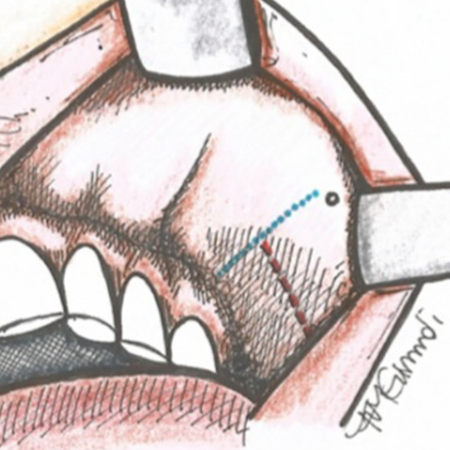
Introduction: Buccal lipectomy consists of partial resection of the buccal fat pad and is indicated for esthetic and/or functional purposes. Objective: This study aims to discuss descriptions of the intraoral technique, its variations, anatomical considerations and the results achieved. Methods: Integrative review of Lilacs, PubMed and SciELO databases. Sixteen articles were selected, totaling 507 patients submitted to the procedure. Results: Surgical approaches were performed on the buccal...
Read more
Introduction: Allergy to amoxicillin (a first-line beta-lactam) is a common challenge in Dentistry, especially in oral surgery and prophylaxis. Historically, clindamycin was the main alternative, but recent guidelines revised this recommendation, due to the high risk of Clostridioides difficile colitis. Objective: The primary objective was to assess the rationale for clindamycin restriction and detail the preferred alternatives. Methods: This systematic review analyzed publications...
Read more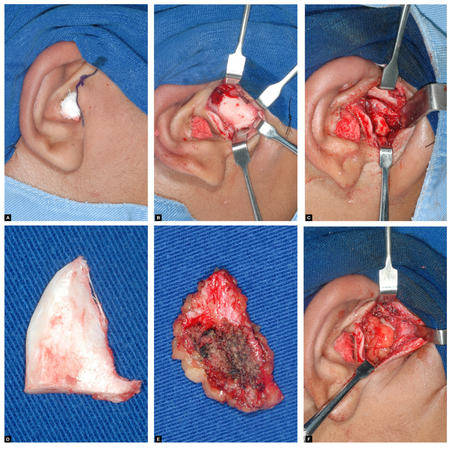
Introduction: Temporomandibular joint (TMJ) ankylosis is a rare condition, usually caused by trauma or local infections, characterized by the fusion of the articular surfaces by bone or fibrous tissue. It severely restricts mouth opening, affecting chewing, speech, appearance, and hygiene. Gap arthroplasty with interpositional abdominal fat graft is a well-established treatment. Objective: This retrospective longitudinal study aimed to assess clinical and imaging outcomes in four patients...
Read more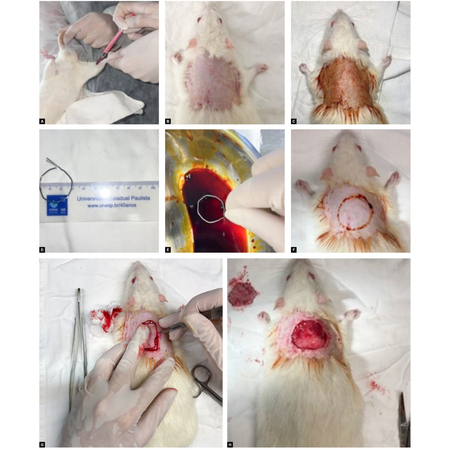
Introduction: The skin, the largest organ in the body, has protective functions and regenerative capacity. Ozone therapy, with antimicrobial, anti-inflammatory, and wound healing properties, has been applied by several routes, promoting tissue repair. Despite promising, it still lacks standardized protocols and clinical studies, justifying investigations into its use in skin wounds. Objective: This study evaluated the effectiveness of ozone therapy by intraperitoneal and subcutaneous...
Read more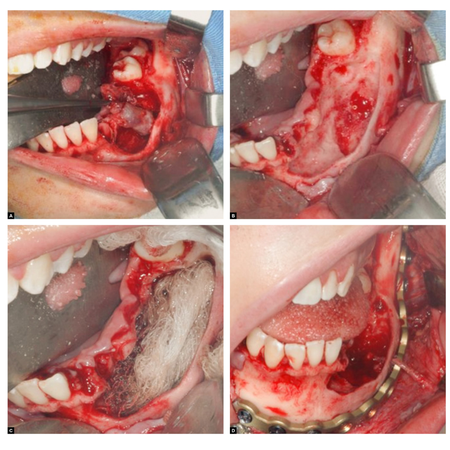
Introduction: Ameloblastoma is a benign odontogenic tumor that represents 9 to 11% of tumors in this category, classified into three forms: conventional, unicystic and peripheral. These variations influence the clinical and radiographic characteristics, age range and treatment methods. In some cases, a conservative approach with regular monitoring may be effective, using techniques such as decompression followed by curettage, cryotherapy or application of Carnoy's solution. Objective: The...
Read more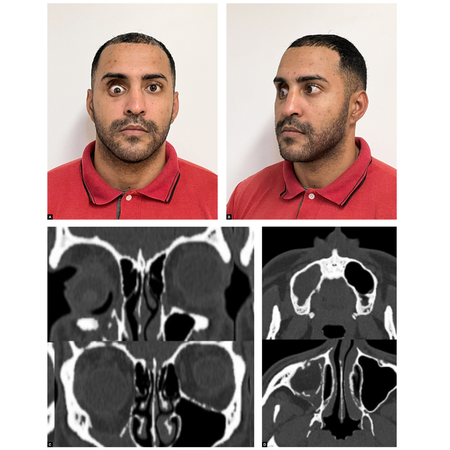
Introduction: The blow-out fracture concept involves an explosion of the orbital floor and displacement of orbital contents into the ipsilateral maxillary sinus. It is considered the fourth most susceptible region to facial trauma. Objective: This paper aims to report a clinical case of correction of a pure blow-out fracture sequela, resulting from aggression, using virtual planning. Case report: A 27-year-old male patient primarily complained of esthetic concerns, presenting with dystopia,...
Read more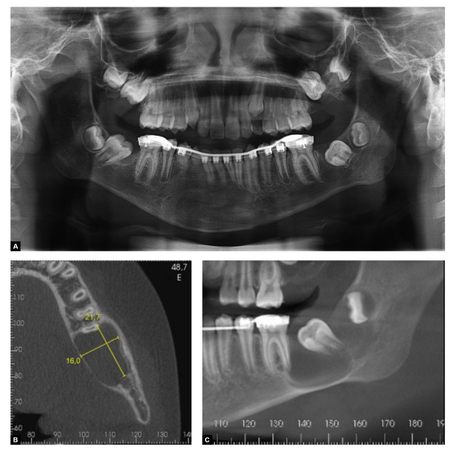
Introduction: Managing Gorlin-Goltz syndrome (GGS) in pediatric patients is particularly challenging, as it necessitates balancing the treatment of the disease's progressive and aggressive nature. Objective: This study report a long follow-up of a pediatric patient with GGS out of the ordinary, due to the presence of two major criteria changes in the first decade of life. Case report: Patient was diagnosed at 8 years old with multiple odontogenic keratocysts, ocular hypertelorism, macrocephaly...
Read more
Introduction: Canine bites resulting in facial trauma pose a significant clinical challenge, due to the high risk of infection and the associated functional and esthetic disorders. These injuries are classified as complex wounds, often with polymicrobial contamination. Objective: This article aims to report a clinical case and discuss the main strategies for managing such injuries. Case report: A 79-yearold female patient, victim of a canine bite, presented extensive facial injuries that...
Read more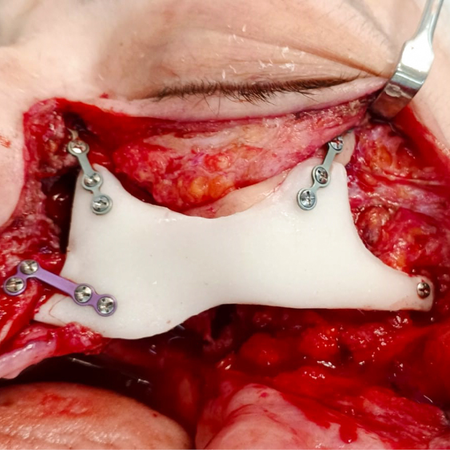
Introduction: Facial malignancies treated with surgery usually result in significant anatomical defects. Titanium is the gold standard, but its high cost limits accessibility. PMMA emerges as a cost-effective alternative, with good efficacy when associated with 3D planning. Case report: A patient, who underwent maxillectomy and radiotherapy 4 years prior for squamous cell carcinoma of the palate, presented with an extensive maxillary defect. 3D planning, stereolithography with ABS polymer,...
Read moreCopyright © 1998 - 2026 DentalGO | All Rights Reserved. DentalGO is a Dental Press brand.