
ISSN 3085-9484
ISSN 3085-9484

ISSN 3085-9484
Your cart is empty!

Oral and Maxillofacial Surgery is experiencing a moment that demands scientific knowledge, ethical responsibility, the ability to engage in dialogue, and institutional steadfastness from all of us. In a scenario marked by regulatory changes, technological advances, and growing challenges in healthcare delivery, the role of the Brazilian College of Oral and Maxillofacial Surgery (CBCTBMF) becomes even more relevant. Our commitment is to work on different fronts, always with the same purpose:...


To understand the current landscape of the level of scientific evidence in publications on Oral and Maxillofacial Surgery and Traumatology, it is necessary to take a journey into the past. In 1996, Richard Horton, editor-in-chief of the prestigious journal The Lancet, published the seminal editorial “Surgical research or comic opera: questions, but few answers,”1 in which harsh criticism was directed at the quality of surgical research, arguing that, at the time, randomized clinical...

1. How was your career influenced by pursuing training in Dallas? Professor, tell us a little about your background and academic trajectory. I obtained my degree in Dentistry in 1979 from the Araraquara School of Dentistry – UNESP. I was hired by UNESP in 1980. Afterwards, I completed my MSc and PhD in Oral and Maxillofacial Surgery at Araçatuba School of Dentistry, UNESP. After finishing my postgraduate studies, I spent two years at the Southwestern Medical Center, University of Texas, in...

JBCOMS interviews Dr. Jairo Santos Oliveira, President of the Federal Council of Dentistry (CFO), about the implementation of the Specialist Qualification Registration (RQE, Registro de Qualificação de Especialista, in Portuguese) in the field of Oral and Maxillofacial Surgery (OMFS). 1. How will the RQE be implemented in practice for professionals in OMFS? The implementation is being conducted by the RQE Implementation Committee, established by the Federal Council of Dentistry on April 6 of...
CBCTBMF interviews Dr. Rodrigo Alves Rodrigues, General Coordination of Health Residencies (CGRS) at the MEC (Ministry of Education), operating under the organizational structure of the Secretariat of Higher Education (SESU). What content, clinical competencies, and surgical skills should be part of a minimum national curriculum for training in Oral and Maxillofacial Surgery (OMFS)? The curriculum is structured around progressive competencies, integrating the knowledge, skills, and attitudes...
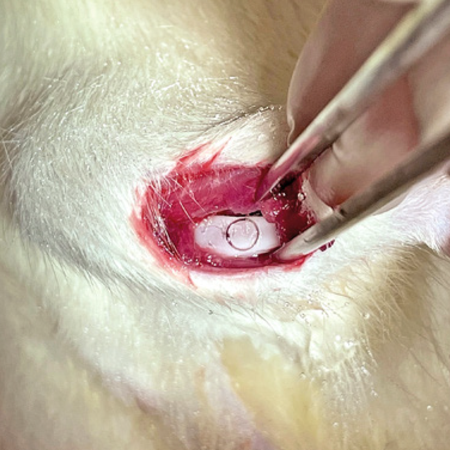
Introduction: Piezosurgery enables selective bone cutting by ultrasonic microvibrations and has been widely used in dental procedures. Objective: This study aimed to histologically analyze and compare bone repair after osteotomy using rotary drills and piezoelectric devices. Methods: Thirty male Wistar rats (60 days old) underwent osteotomy, with two standardized defects per animal created using both techniques. Animals were divided into five groups (n=6) and euthanized at 3, 7, 14, 30, and...
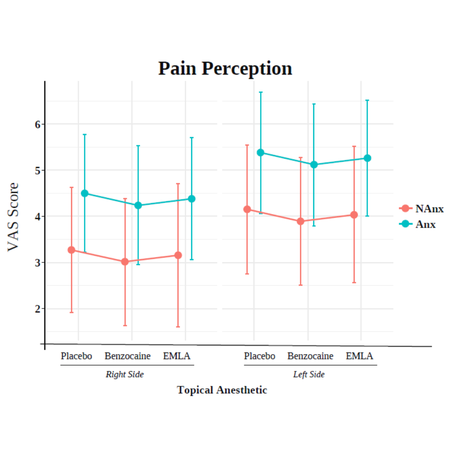
Introduction: Fear and anxiety are frequently associated with dental treatment because anticipation of pain increases anxiety and amplifies pain perception, creating a self-perpetuating vicious cycle. Local anesthetic injection is commonly associated with pain expectation and may be alleviated by the prior application of topical anesthetics, particularly in anxious patients. Topical anesthetics commonly used in dentistry are 20% Benzocaine and 5% EMLA (Eutectic Mixture of Local Anesthetics),...
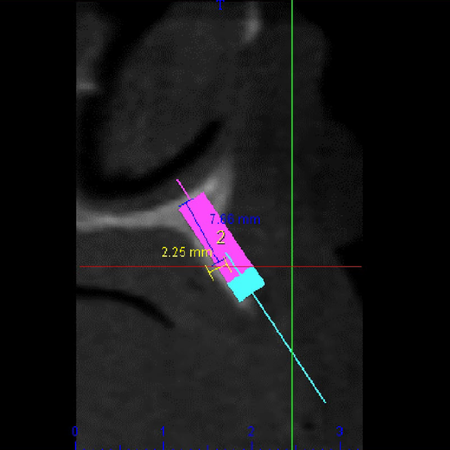
Introduction: Flapless guided surgery represents a significant advancement in osseointegration; however, it requires careful evaluation of bone availability to ensure proper implant placement. Objective: To analyze tomographic scans of completely edentulous maxillae in order to assess the feasibility of rehabilitation using the All-on-4® protocol through guided surgery, by measuring bone height, bone thickness, and the presence of fenestrations at implant sites. Methodology: Eighty tomographic...
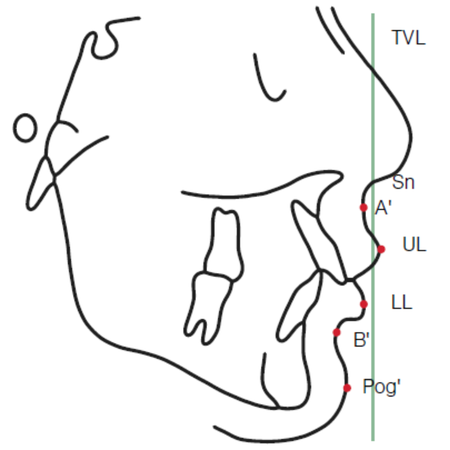
Introduction: Sagittal split ramus osteotomy (SSRO) is a procedure to correct dentofacial deformities, but presents a risk of injury to the lower alveolar nerve. Knowing accurately the mandibular anatomy and the position of the mandibular canal is essential to reduce complications and minimize nerve injuries, improving surgical planning. Objective: This prospective study evaluated, through cone beam computed tomography (CBCT), the positioning of the inferior alveolar nerve (INA) in relation...
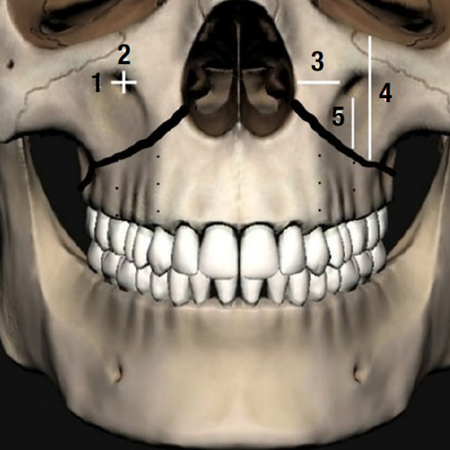
Introduction: the design of the Le Fort I osteotomy is traditionally based on standardized reference values; however, individual anatomical variability may influence its relationship with critical structures such as the infraorbital foramen. Objective: The aim of this study was to evaluate the influence of sex and height in the anatomic characteristics of the design of conventional Le Fort I osteotomy (CL). Methods: Thirty-two cadavers were submitted to dissection on both sides of the...
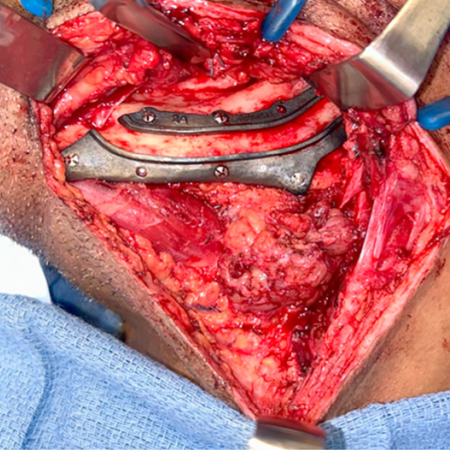
Introduction: The inferior alveolar nerve provides sensory innervation to the lower lip, chin, and teeth, and is commonly vulnerable to trauma, surgical procedures, or pathologies. Its injury may result in paresthesia, dysesthesia, hyperesthesia, and functional impairment, requiring an individualized approach to restore sensory function. Objective: This study reports a case of microsurgical reconstruction of the inferior alveolar nerve after treatment for correction of mandibular fracture,...
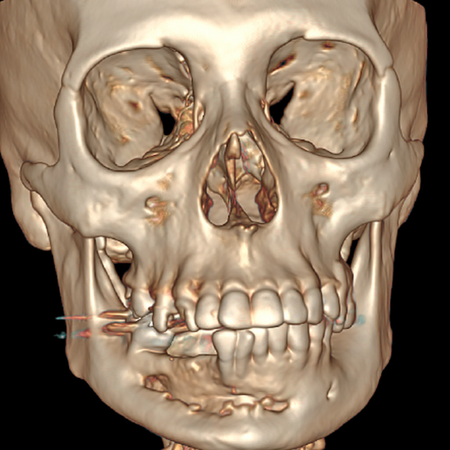
Introduction: Ameloblastoma is a benign odontogenic tumor commonly found in the mandible, accounting for approximately 10% of mandibular and maxillary tumors. It presents slow growth yet is locally invasive, typically presenting with painless edema. According to the WHO (2017), it is classified into four types: ameloblastoma, unicystic, extraosseous/peripheral, and metastatic. Diagnosis involves clinical, imaging, and histopathological examinations. Treatment varies based on lesion type,...
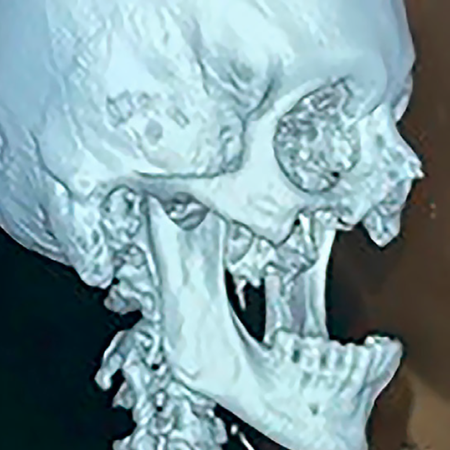
Introduction: Mucormycosis is a rare but aggressive opportunistic fungal infection commonly affecting the rhino-cerebral region in immunocompromised or diabetic patients. Surgical debridement, including total or partial maxillectomy, is often required for disease eradication but results in significant hard and soft tissue defects that severely impair mastication, speech, facial contour, and quality of life. Reconstruction of bilateral maxillary defects remains challenging, particularly when...
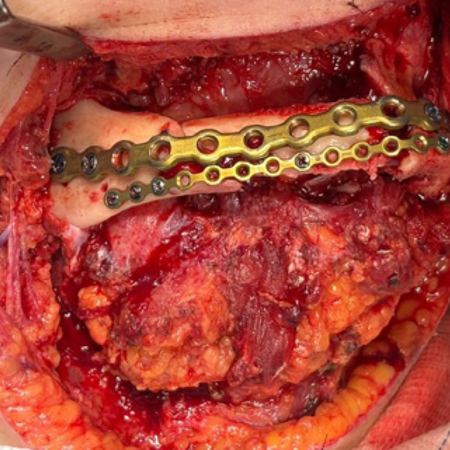
Objective: To report a clinical case of the treatment of a cemento-ossifying fibroma (COF) tumor in the right mandibular body region, managed with segmental resection associated with bone reconstruction using a free fibula graft. Case report: A 31-year-old female patient presented with facial asymmetry due to volumetric increase in the right lower third of the face, asymptomatic, with paresthesia. Imaging exams revealed an expansive intraosseous lesion measuring 5.0 × 3.7 cm in the anterior...
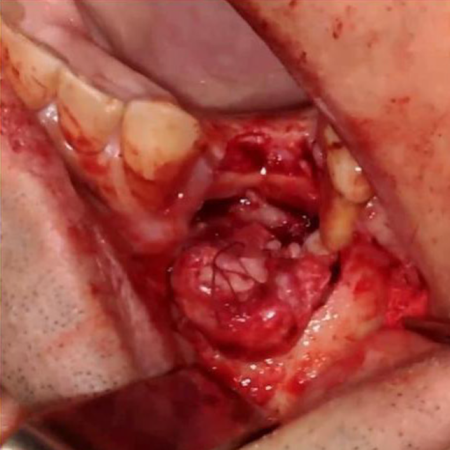
Introduction: Oroantral communication (OAC) is a common complication of dental procedures involving the posterior maxilla, particularly following maxillary molar extractions and implant surgery. If left untreated, it may progress to persistent oroantral fistula formation and chronic maxillary sinus disease. Objective: This study reports the management of an extensive OAC using a three-step surgical approach and evaluates its effectiveness in achieving defect closure and structural...
Copyright © 1998 - 2026 DentalGO | All Rights Reserved. DentalGO is a Dental Press brand.